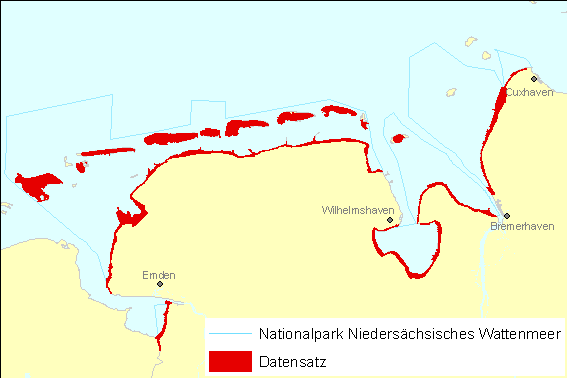
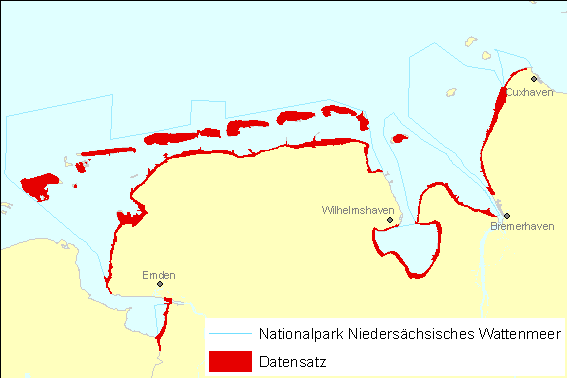
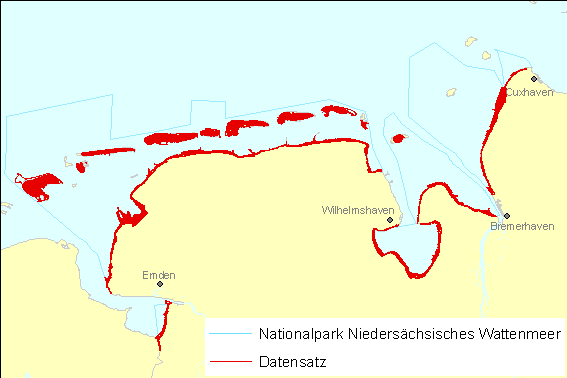
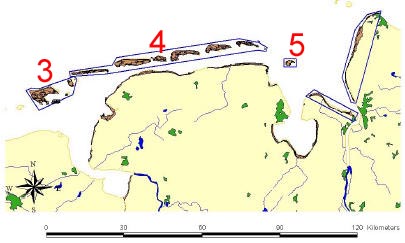
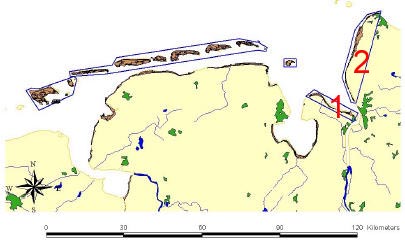
Die Kartierung der Habitate erfolgte durch Klassifizierung von digitalen CIR-Luftbildern mit GRASS-GIS und über Geländearbeit. Die digitalen Befliegungen fanden 2002 (Kameratyp HRSC-AX) und 2003 (Kameratyp DMC) statt. Die Klassifikation und die Geländearbeit erfolgte 2004. Zur Kartierung von Salzwiesen, Dünen und Grünland wurde ein Schlüssel aus dem "Trilateral Monitoring And Assessment Program" angewendet. The habitat types were identified by processing digital aerial images with GRASS-GIS and through field work. The aerial flights took place in 2002 (camera type HRSC-AX) and 2003 (camera type DMC). For the classification of saltmarshes, dunes and antropogenic grassland a key has been used, which was developed in the "Trilateral Monitoring And Assessment Program" (TMAP).
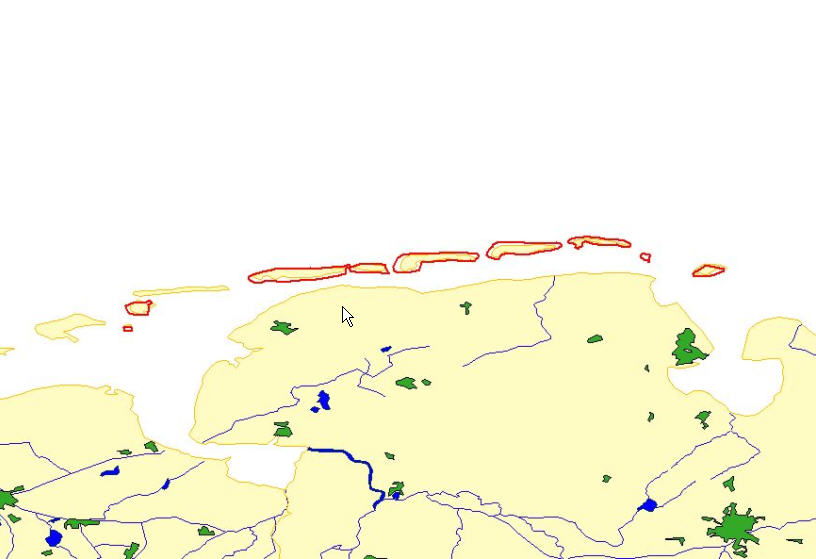
Biotoptypen terrestrischer Bereiche im Nationalpark Niedersächsisches Wattenmeer 1991. Die Kartierung der Biotoptypen erfolgte durch Interpretation von CIR-Luftbildern. Die Befliegung fand am 21.08.1991 statt. Biotope types of terrestrial areas in the Wadden Sea National Park of Lower Saxony 1991. The mapping of biotope types was conducted by interpretation of CIR aerial images. The aerial flight took place at the 21.08.1991.
Biotoptypen terrestrischer Bereiche im Nationalpark Niedersächsisches Wattenmeer 1997. Die Kartierung der Biotoptypen erfolgte durch spiegelstereoskopische Interpretation von CIR-Luftbildern. Die Befliegung fand am 21.08.1997 statt. Biotope types of terrestrial areas in the Wadden Sea National Park of Lower Saxony 1997. The mapping of biotope types was conducted by stereoscopic interpretation of CIR aerial images. The aerial flight took place at the 21.08.1997.
Biotoptypen terrestrischer Bereiche im Nationalpark Niedersächsisches Wattenmeer 1997. Die Kartierung der Biotoptypen erfolgte durch spiegelstereoskopische Interpretation von CIR-Luftbildern. Die Befliegung fand am 21.08.1997 statt. Biotope types of terrestrial areas in the Wadden Sea National Park of Lower Saxony 1997. The mapping of biotope types was conducted by stereoscopic interpretation of CIR aerial images. The aerial flight took place at the 21.08.1997.
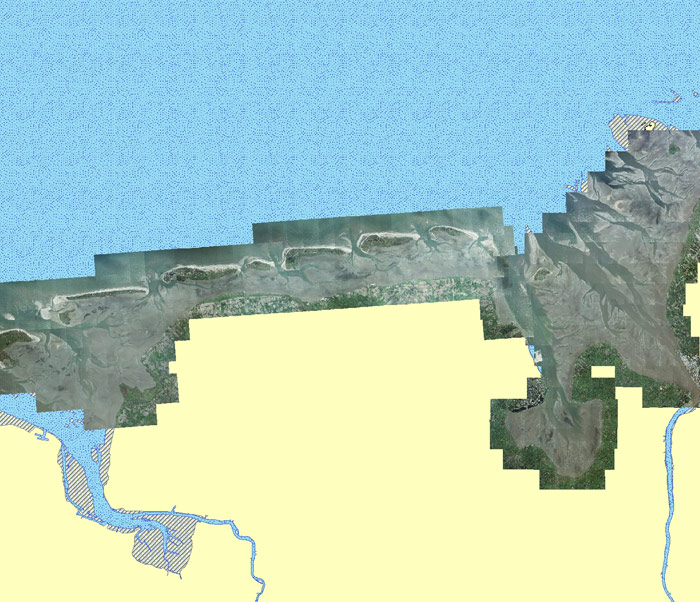
Befliegung des Niedersächsischen Wattenmeeres im Rahmen des Miesmuschelmonitorings zur Auswertung der Miesmuschelausprägung im Niedersächsischen Wattenmeer. Gebiete: Raum des Wattenmeeres. Produkte: Orthobildmosaike.
Befliegung des Niedersächsischen Wattenmeeres im Rahmen des Trilateral Monitoring and Assessment Program (TMAP) 2002. Gebiet: Wattenmeerinseln. Produkte: Orthobildmosaike in den Kanälen RGB, CIR und PAN, Digitales Oberflächenmodell (DOM) Aerial flight of the lower saxonian wadden sea as part of the Trilateral Monitoring and Assessment Program (TMAP) 2002. Covered area: Waddensea islands. Products: true color, color infrared and panchromatic ortho photo mosaic and a digital surface model.
Befliegung des Niedersächsischen Wattenmeeres im Rahmen des Trilateral Monitoring and Assessment Program (TMAP) 2002. Gebiet: Wesermündung. Produkte: Orthobildmosaike in den Kanälen RGB, CIR und PAN, Digitales Oberflächenmodell (DOM) Aerial flight of the lower saxonian wadden sea as part of the Trilateral Monitoring and Assessment Program (TMAP) 2002. Covered area: Estuary of the river weser. Products: true color, color infrared and panchromatic ortho photo mosaic and a digital surface model.
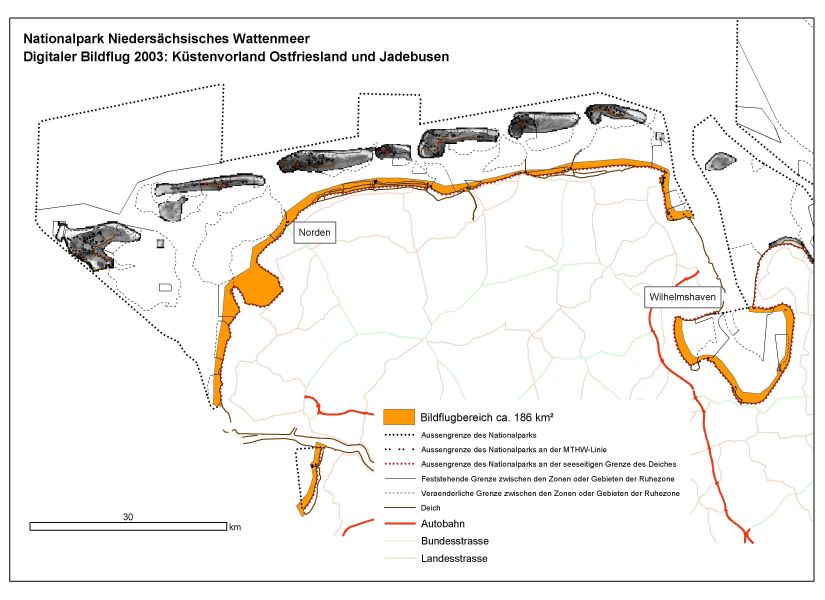
Befliegung des Niedersächsischen Wattenmeeres im Rahmen des Trilateral Monitoring and Assessment Program (TMAP) 2003. Gebiete: das Küstenvorland im Dollart (Emsmündung), das Küstenvorland Ostfriesland bis Hooksiel sowie das Küstenvorland im Jadebusen. Produkte: Orthobildmosaike in den Kanälen RGB, CIR und PAN, Digitales Oberflächenmodell (DOM). Arial flight of the lower saxonian waddensea as part of the Trilateral Monitoring and Assessment Program (TMAP) 2003. Covered area: coastal areas of the eastfrisian coast and the Jadebusen. Products: true color, color infrared and panchromatic ortho photo mosaic and a digital surface model.
Befliegung des Niedersächsischen Wattenmeeres im Rahmen des Trilateral Monitoring and Assessment Program (TMAP) 2004. Gebiet: Wattenmeerinseln. Produkte: Orthobildmosaike in den Kanälen RGB, CIR und PAN, Digitales Oberflächenmodell (DOM) Aerial flight of the lower saxonian waddensea as part of the Trilateral Monitoring and Assessment Program (TMAP) 2004. Covered area: Waddensea islands. Products: true color, color infrared and panchromatic ortho photo mosaic and a digital surface model.
Im niedersächsischen Wattenmeer lassen sich eine Reihe von Beobachtungen machen, die auf eine starke anthropogene Belastung des Ökosystems schließen lassen: Schadstoffkonzentrationen im Sediment und in Biota, die als ökotoxikologisch problematisch gelten; starker Bestandsrückgang der Miesmuschel; Tributylzinn-verursachte sexuelle Veränderungen bei Schnecken; Jahre mit sehr hohen Frühjahrsblüten des Kleinstflagellaten Phaeocystis; Jahre, in denen der Wattenmeerboden mit großflächigen Grünalgenbelägen zuwächst; extremer Rückgang des Seegrasbestandes. Z. T. ist es allerdings schwer, die Folgen extremer meteorologischer Ereignisse von anthropogenen Einflüssen zu trennen. Doch lässt sich anhand der Auswirkungen extremer Witterungsbedingungen zeigen, welche Konsequenzen Schädigungen einzelner Ökosystemkomponenten auf andere Elemente der Lebensgemeinschaft im Wattenmeer haben können. Ähnliches dürfte für anthropogen bedingte Störungen gelten. Einige Kausalitäten zwischen Belastungsfaktoren (meteorologisch wie anthropogen) und Veränderungen im Ökosystem lassen sich zeigen, für andere fehlt bisher der Nachweis. In the Wadden Sea of Lower Saxonia (Niedersachsen) there are numerous observations, which suggest a strong anthropogenic impact to the ecotoxicological relevance; considerable decrease of the standing stock of Blue mussels; alterations to the sexual organs of snails caused by Tributyltin; years with exceptional spring blooms of the nanoflagellate Phaeocystis; vegetation periods, during them, the greenalgae grow to extensive and thick layers; extreme decrease of the occurrence of eelgrass. To some extent however it is difficult to distinguish between strong meteorological events and anthropogenic influences. The effects of extreme weather conditions are nevertheless good examples for the consequences, the damage of one component of the ecosystem causes to other elements of the Wadden Sea community. Some causalities between stress factors (meteorological as well as anthropogenic) and changes in the ecosystem can be identified, but there are also impacts without demonstrable consequences.